The Kolbes
A German tailor's family in Bond Street, a boy married at sixteen and a settler at seventeen, a missionary's circuit through the Orange Free State, and a Karoo farm named for a country its owner had never seen.
George Augustus Kolbe, 1802–1844 — an 1820 Settler
The family's research notes wonder whether John Augustus Barry was born at sea with the 1820 Settlers. He was not. But the family does have a documented settler, on the other side of that marriage, and his record is unusually complete.
| Born | 7 December 1802, Westminster St Anne, London |
| Christened | 2 February 1803, St Anne's, Soho — the register names his parents John Gottlob & Mary, and gives his birth as 7 Dec 1802, matching the Burgersdorp gravestone to the day. The register → |
| Married | 20 January 1819, St Leonard's, Shoreditch — Margaret Georgina Elizabeth Downing, on a sworn oath that both were "of the age of Twenty-one Years and upwards". He was sixteen; she was fifteen. The allegation → |
| Sailed | Gravesend, 3 December 1819, on the ship Nautilus, in Thomas Owen's party |
| Landed | Algoa Bay, 14 April 1820 |
| Trades | Reverend Missionary, London Missionary Society · Chemist · Tailor — but his death notice calls him simply an Agriculturist |
| Died | 1 December 1844, the farm "Wurtemburg", field-cornetcy of Rhenosterberg, Knapdaar, district Colesberg |
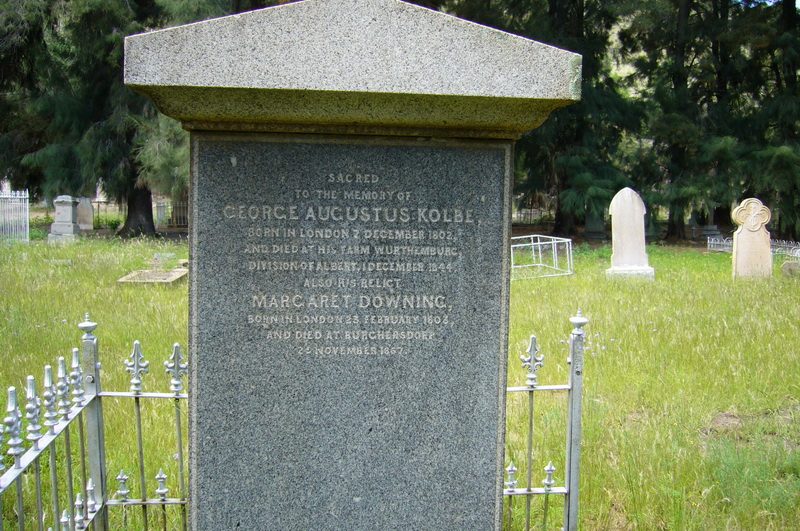
| Buried | December 1844, Burgersdorp Old Cemetery |
| Estate | 7698 — KAB MOOC 6/9/35 (1845); read, and valued at about £1000 sterling |
He was sixteen when he married at Shoreditch and seventeen when he stepped ashore at Algoa Bay. His wife was about fifteen.
And they said otherwise. The marriage allegation of 20 January 1819 has him swear on oath that he is "a Bachelor of the age of Twenty-one Years and upwards" and she "a Spinster of the age of Twenty-one Years and upwards." Under Hardwicke's Marriage Act a minor could not marry by licence without a parent's consent. Both ages are false. The document →
The voyage, confirmed at last — and they lied about their ages again
This archive has carried the Nautilus since the first day, entirely on the family tree's word. It has now been checked against the settler roll.
Confirmed
Owen's party sailed from Gravesend on 3 December 1819 in the Nautilus, reached Table Bay on 17 March 1820 and Algoa Bay on 14 April 1820. Fifty-two settlers.
Every date the tree gave is right. Open question 9, answered
And a trade nobody had
The roll enters him as:
KOLBE, George Augustus 20. Chemist. w Margaret 19.
This archive has him as a preacher and a farmer. On the ship's list, at seventeen, he is a chemist — which is to say an apprentice apothecary, and a London tailor's son reaching for a profession.
Now put the ages beside the documents.
| Document | He is stated to be | He actually was | She is stated | She actually was |
|---|---|---|---|---|
| 1819 — marriage allegation, Shoreditch | 21 | 16 | 21 | 15 |
| 3 Dec 1819 — the Nautilus settler roll | 20 | 16 | 19 | 16 |
He was born 7 December 1802 — the parish register says so — and the ship sailed four days before his seventeenth birthday. She was born 23 February 1803, which her own death notice gives to the day.
They overstated their ages twice in one year, on two different official documents, to two different authorities. The archive already knew about the marriage allegation and treated it as a single desperate act by a couple who wanted to marry. It was not single. Within months they did it again — to get on a ship.
What it does not tell us Whether the overstatement was theirs or the party's. Thomas Owen had to present a party the Colonial Department would accept, and a seventeen-year-old chemist with a sixteen-year-old wife is a less convincing settler than a man of twenty with a trade. The lie may have been written for them. Either way it was on the paper. The marriage allegation →
Settler roll: 1820settlers.com, Owen's party, accessed 10 September 2026 — the same database whose citation for James Jonathan Mountjoy this archive found to be wrong, so it is used here for what it is: a compiled transcript, corroborating dates the tree already carried, and adding one occupation.
The children are a missionary's itinerary
Not a settler farm but a circuit — and two of the stops are London Missionary Society stations north of the Orange River.
| Child | Born | Place | |
|---|---|---|---|
| John Gerson Eliezar “Jan” | 1822 | Uitenhage | |
| Catherine Maria Sophia (Joubert) | 1825 | Graaff-Reinet | |
| Margaretha Wilhelmina Elizabeth Mary (Barry) | 1826 | Graaff-Reinet | the line to David |
| Augusta Louisa “Louise” (Werdmuller Von Elgg) | 1829 | Graaff-Reinet | |
| Harriet Hachilah Machilah (Spiller) | 1831 | Philippolis, Orange Free State | mission station |
| Mary Elizabeth Margaret Willemina (Enslin) | 1833 | Burgersdorp | |
| John | 1834–1835 | — | died an infant |
| Charlotte Felicia (twin) (Snook) | 1836 | Burgersdorp | twin |
| George Augustus (twin) | 1836 | Burgersdorp | twin |
| Frederik Fortunatus | 1839 | Bethulie, Orange Free State | mission station |
| Keetor — read Rector — Peter Benjamin | 1840 | Colesberg | in neither death notice |
| Johan Casimir “Casiner” | 1844 | Bethulie | in both death notices |
The forenames are extraordinary — Hachilah Machilah, Gerson Eliezar, Casimir, Fortunatus. They read exactly as a missionary's children's names should: scriptural, Latinate, chosen rather than inherited.
20 September 2026 — the itinerary was right, and a historian had written it down in 1992. This section deduced a missionary circuit from a list of birthplaces, with no source for any of it. A draft Dictionary of South African Biography entry by Karel Schoeman, sent from Cape Town with the 1830 letter, gives the posting history from the Society’s own records — and the two agree at four separate points: Graaff-Reinet from about 1824 (three children born there, 1825–1829), Philippolis from March 1831 (Harriet Hachilah Machilah born there that year), Bethulie after 1837 (Frederik Fortunatus, 1839, and Johan Casimir, 1844), and Colesberg at the end (Keetor Peter Benjamin, 1840). Two lists made from different things, a hundred and sixty years apart, describing one man’s movements. The draft →
And one of them travels. Frederik Fortunatus Kolbe (1839) becomes Frederick Fortunatus Barry (1863) becomes Frederik Fortsenatus Booÿsen (1899) — one name carried across three surnames and sixty years, degrading slightly at each handover. The women →
He was a missionary — and the word now has a life attached to it
On 15 September this page worked out that he was a missionary from where his children were born, and found a library catalogue in Cape Town that had been saying so in four words since 1985. On 18 September the library sent the papers.
National Library of South Africa ·
MSB 751 — the GA KOLBE COLLECTION
Donated by Dr Jean Griffiths, Somerset West, 1985. Photocopy, 4 pages.
“George Augustus Kolbe, pharmacist, 1820 settler, missionary, married Margaret
Downing. + Letter, 1830 Aug. 23, from Johan Kolbe, London, to his son, George Augustus Kolbe
on his ordination.”
Three separate things line up and none of them knew about the others. This page deduced a missionary circuit from a list of birthplaces. A memoir printed at Bloemfontein in 1869 — John Montgomery, founder of Burgersdorp, recalling a journey of about 1824 — puts him at a Bushman mission school at Koolskop, where Colesberg now stands. And a catalogue entry calls him an LMS missionary.
It also reconciles the occupations, which had never agreed. The 1820 settler roll enters him as a CHEMIST aged twenty when he was seventeen. The catalogue says pharmacist. The 1844 obituary describes a medical practice. They are one trade, and the mission work is the part nobody had.
The letter came, and it is the first thing his father wrote that survives
Four pages, headed “London August 23. 1830”, opening “Dear George,” and signed “Your affectionate father, J G Kolbe”. This archive spent a fortnight trying to join the tailor of Conduit Street to the settler of Colesberg. It now has them in one document, in the tailor’s own hand.
And it does not carry a street address. The heading is “London” and nothing finer, so Brunswick Square against Conduit Street is still open — which was the single question the enquiry most wanted answered. The letter →
And the catalogue was wrong about what kind of letter it is, and this page repeated it. MSB 751 is described as written “on his ordination”, and this section said in a blockquote that he was “ordained, in or about August 1830”.
He was not. The Dictionary of South African Biography draft dates the ordination to 25 May 1833, by the French missionaries Arbousset and Casalis — and the letter itself says only that he had been “fully accepted by the [L.M.S.] as one of their Missionaries”, which is a different step. There were three steps and this page had collapsed them into one:
| 8 Feb 1828 | accepted by the LMS as a mission assistant, and posted across the Orange |
| Aug 1830 | accepted as a missionary — the news his father is writing about |
| 25 May 1833 | ordained, at Philippolis, by Arbousset and Casalis |
A catalogue description is a finding aid, not the document. This archive quoted one as though it were the second. Corrections →
The mission years, 1824–1837 — the entry, and what now tests it
The table below is a single secondary work — Karel Schoeman’s draft DSAB entry of February 1992 — and it is left exactly as it reads, because what an entry says is worth having straight. What has changed is that it is no longer the only account. On 11 October 2026 the London Missionary Society’s own monthly was found free and complete for 1828–1837, and it prints his journal and two of his letters; the Griqua Council’s papers and a sworn deposition of 1858 were read as well. So the years below can now be checked against the Society’s own papers, and the first thing that check moved was a date. What tests it, page by page ↓
| When | What the entry says |
|---|---|
| c. 1824 | Enters the service of the Graaff-Reinetse Zendelings Genootschap and works for several years among the slaves of the Graaff-Reinet district, until the society can no longer afford him and merges with the LMS. |
| 8 Feb 1828 | Accepted as a mission assistant and placed at the new station Boesmanskool — the present Bethulie — across the Orange, with James Clark, among the San. |
| Nov 1828 | Travels with John Melvill to the Caledon River valley, apparently as far as present-day Ladybrand: the earliest journey in the present Free State of which a written record survives — and he wrote it. |
| Mar 1831 | Transferred to the Griqua station Philippolis, with Melvill, and alone after Melvill leaves in March 1832. |
| 25 May 1833 | Ordained by T. Arbousset and E. Casalis of the Paris mission. |
| 1833–34 | Supports the French missionaries beginning work among Moshweshwe’s Basotho, and advises the Berlin Missionary Society to found Bethanie for the Korana of the Riet River. |
| 1836 | Accused of adultery with the wife of one of his congregation. Acquitted after an inquiry by the French missionaries. |
| Mar 1837 | Withdraws from Philippolis. Dismissed by the LMS on 19 June 1837. |
| 1837–44 | His farm Driefontein near Philippolis, then Bethulie, then Wurtemberg in the district of Colesberg, where he dies suddenly seven years later. |
The accusation, and why it is printed here in full
At Philippolis the station was split between Griqua and Baster, his predecessor Melvill had already been a casualty of it, and his own marriage was under strain. In 1836 he was accused of adultery with the wife of one of his congregation — a charge, the entry says, “often used as a means of revenge against missionaries of the period”. H. Hendricks, secretary of the Griqua Council, led the agitation. An inquiry by the neighbouring French missionaries acquitted him. His younger colleague T. Atkinson went on opposing him, and he left in March 1837.
This family did not know any of it. It is one sentence in an unsigned draft, about a man who cannot answer, and it would have been easy to keep the founding of Bethanie and lose this. Keeping one and dropping the other is the worst thing an archive can do with a source. He was accused, he was investigated, and he was cleared. All three belong on the page. the Captaincy’s own papers now say it too
The papers that would test it are the Griqua Council’s own, and they are printed: Schoeman (ed.), Griqua Records: the Philippolis Captaincy, 1825–1861, Van Riebeeck Society II/25 — published after this typescript was typed, which is why its own author could not cite it there. This page said “two years after” until 11 October 2026, when the catalogue record was read: it gives 1996, which is four. The reasoning is untouched; the arithmetic is now the catalogue’s and not this archive’s. It has been read.
He wrote something else, and it is findable
The November 1828 journey was printed — but under the other man’s name, which is why searching for Kolbe found nothing: “Extracts of the Journal of Messrs Melvill and Kolbe, addressed to the Rev. Richard Miles…, Philippolis, 25 Nov. 1828”, in the Council for World Missions archive.
Legassick quotes it. On the Caledon they met people with “no other means of subsistence than the wild animals found in these parts”. The first words of his this archive has read, and they are about famine.
The journey is printed entire in Schoeman (ed.), Early White Travellers in the Transgariep, 1819–1840 (Protea, 2003), p. 30.
11 October 2026 — this journey is still not found, and a different one is. All ten volumes of the Society’s monthly for 1828–1837 were read: the 1828 and 1829 volumes name him nowhere, so the DSAB’s “Transactions of the Missionary Society for 1829” means the other serial. But the 1833 volume prints eleven months of his journal — below ↓
And there may be a face
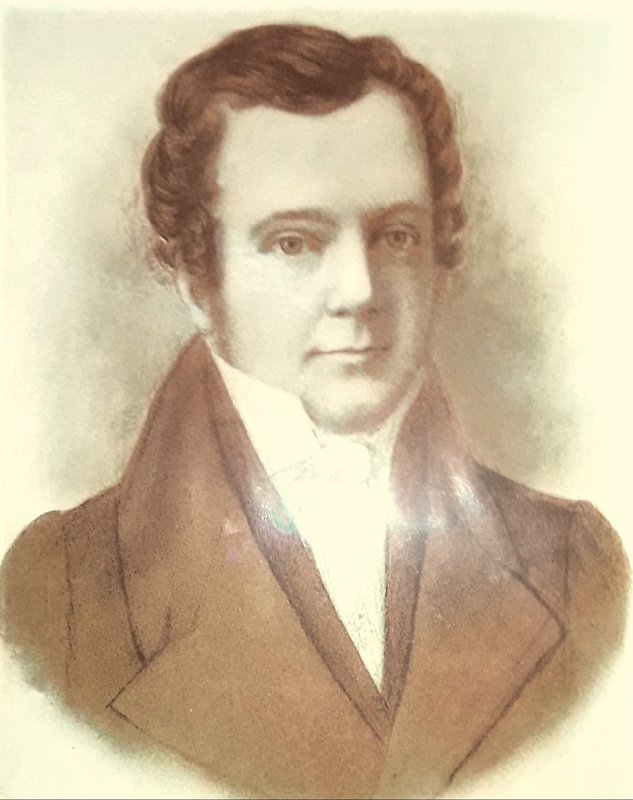
This archive holds no likeness of anybody born before 1850. The entry names two: a portrait of him as a young man, in 1992 with a descendant at Ruigtevlei near Bethulie; and a watercolour by Charles Bell of a church service at Philippolis in 1834, with Kolbe in the pulpit.
The second is catalogued in Scotland — University of Edinburgh, CSWC 60, item 3, “Mr. Kolbe… at Philippolis in 1834”. Edinburgh calls him “a moravian missionary?”, question mark and all. He was LMS, and this archive has his father’s letter saying so.
What tests it — five pages, read from the type
Found on 11 October 2026, all of it free and none of it borrowed. Six works are out of copyright and were taken whole; the pages that carry him were fetched as images and read from the type rather than from the transcript, which corrected the transcript twice. The printed works, in the register →
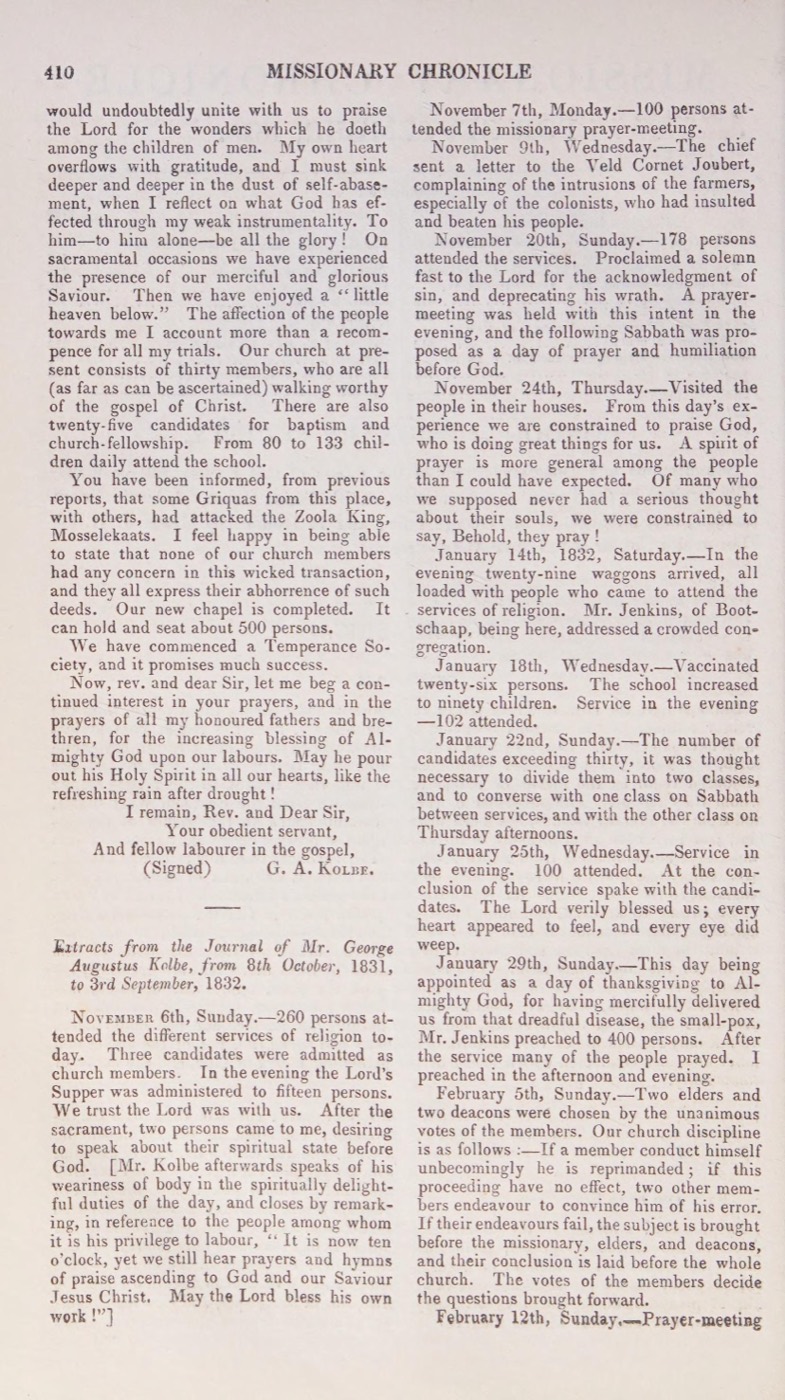
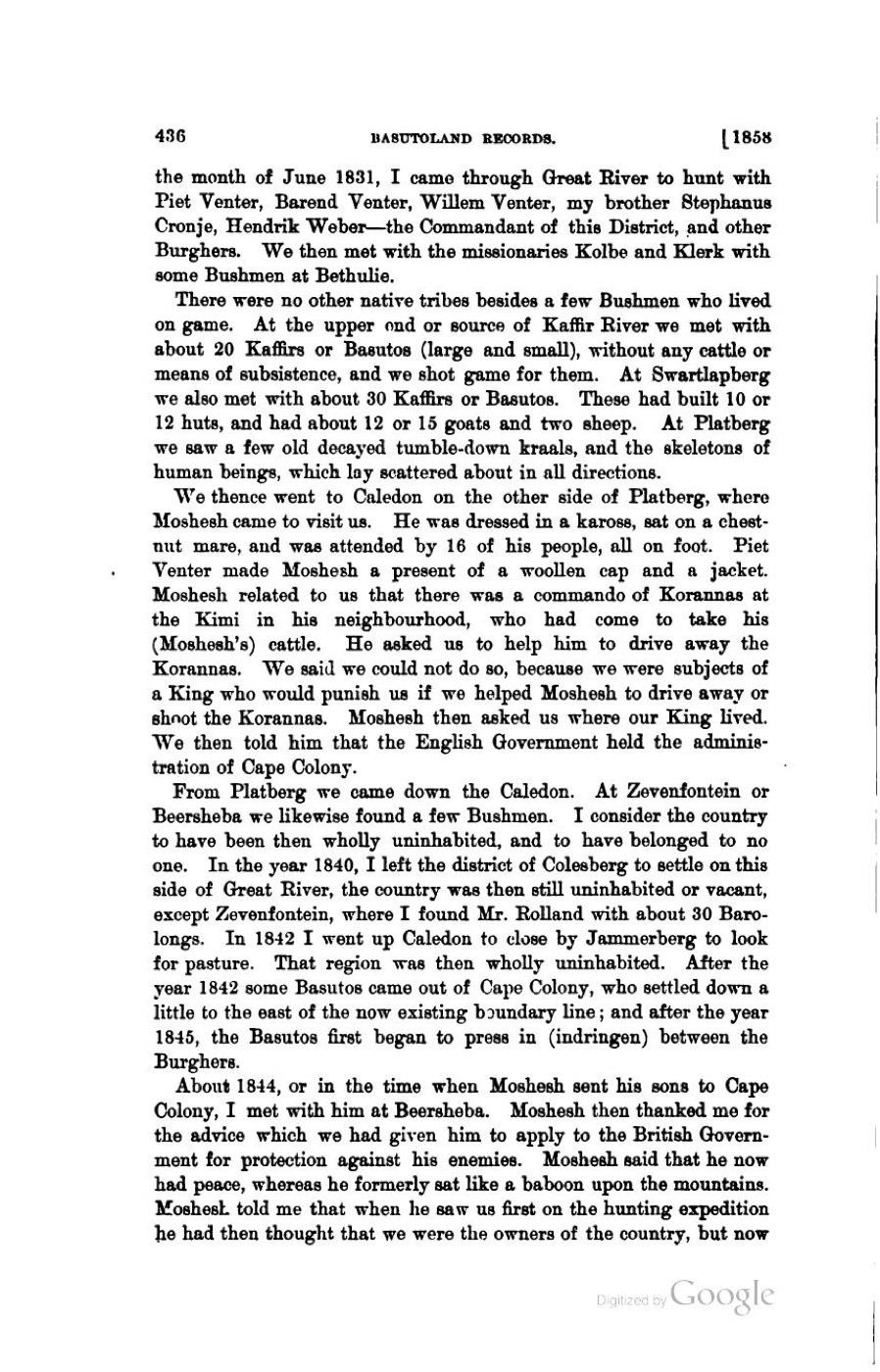
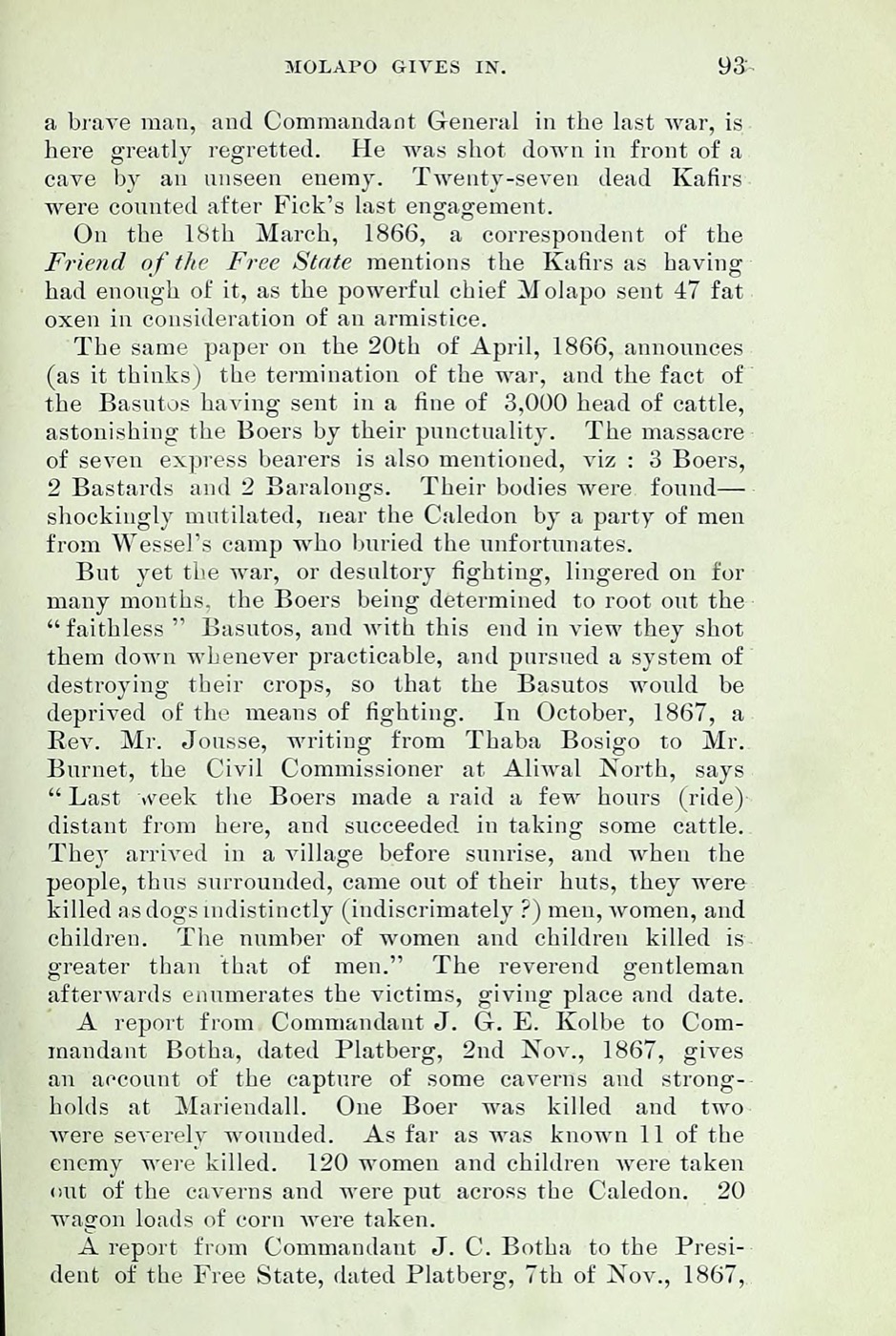
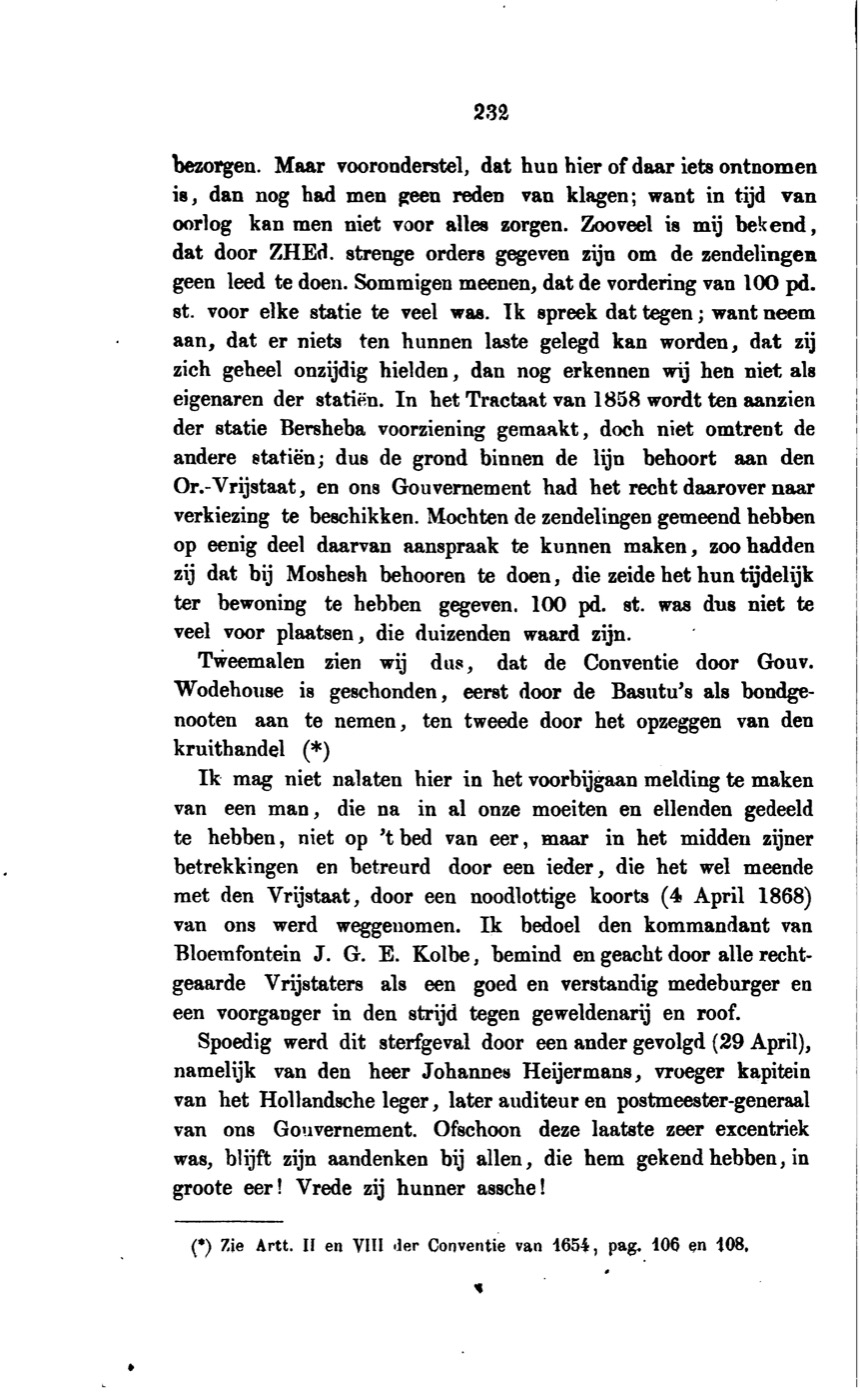
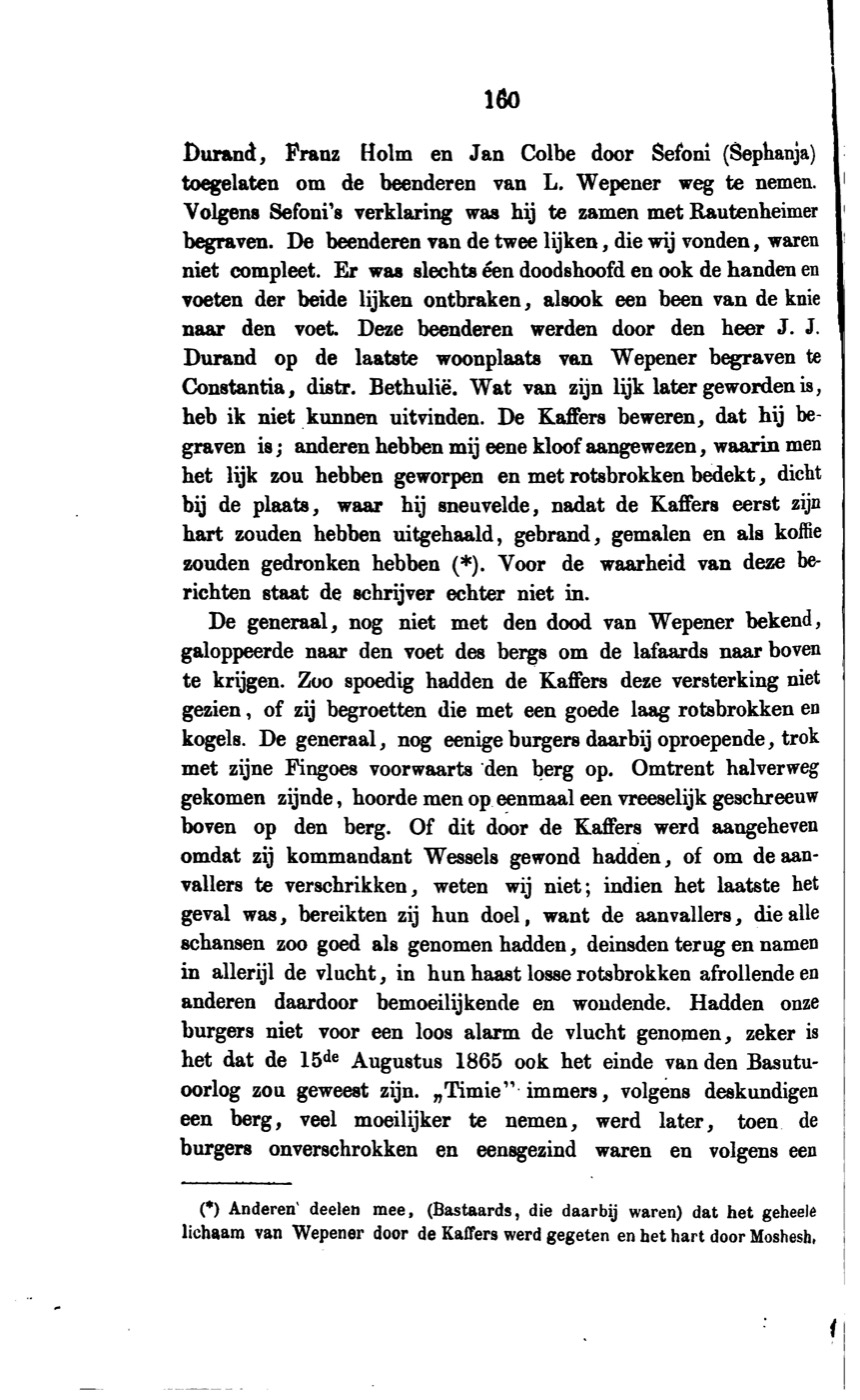
And the date in the table above is the one that moved
The entry says he was accepted on 8 February 1828; Sibree’s register of LMS missionaries says 8 February 1829. This archive carried both from September and could not choose. His own letter chooses. Writing from Philippolis on 30 April 1831 he says he had resided “nearly three years among the Bushmen previous to my removal to this station”, and then plainly: “When I arrived, in April, 1828, with my colleague, in the Bushman country.” James Clark says it from the other side, writing from the Bushman Station on 31 December 1828: “brother Kolbe and myself removed to this station, and arrived here in the beginning of May last.”
So both dates stand and neither is wrong. 1828 is the going; 1829 is the Society formally accepting a man already a year in the field. Nearly three years from April 1828 also lands exactly on Sibree’s own “arriving at Philippolis, March 13, 1831” — the two halves of that entry were always consistent and nobody had the middle. settled from his own hand
The Commandant’s twelve, and nine of them now have fonts
His obituary said he left eight sons and four daughters and named not one of them. For a fortnight this archive could not either. The way in was to stop searching for him.
His name cannot be searched. Across six documents he is John Gerson Eliezar, Jan Gerson Eliese, Johan Gerson Eliezer, John G E, J G E and — on his own son’s death registration — John Gerson Elinger. His wife’s is spelled one way. One query on Anna Jacoba van der Merwe, on 27 September 2026, returned seven baptisms of their children; two more came from civil death registrations that name both parents.
| Child | Born, and christened | On what |
|---|---|---|
| Catharina Wilhelmina Kolbe | 1844, Cape Colony | a register |
| George Augustus Kolbe of 1845 | 30 Sep 1845, baptised Colesberg 8 Mar 1846 | a register |
| Williem Johannes Kolbe of Panfontein | 2 Aug 1847, baptised Fauresmith 12 Mar 1848 | a register |
| Jan Hendrik Kolbe | 5 Jul 1849, baptised Fauresmith 9 Oct 1849 | a register |
| Petrus Jacobus Kolbe of 1852 | 4 May 1852, baptised 7 Jun 1852 | a register |
| Margaretha Elizabeth Kolbe of 1854 | 16 Feb 1854, baptised 2 Apr 1854 | a register |
| Andries Frederick Kolbe of Leeuwberg | 1856 | a register |
| Anna Susanna Kolbe of 1860 | 15 Aug 1860, baptised Bloemfontein 7 Oct 1860 | a register |
| Johan Hendrik Cassimir Kolbe | 1863, Orange Free State | a register |
| Anna Jacoba Kolbe of 1864 | 3 Nov 1864, baptised Bloemfontein 1 Jan 1865 | a register |
| Frederik Fortunatus Kolbe of Bloemspruit | 22 Oct 1859, or 1857 — two documents disagree | a user tree |
The fonts record a move that no document states. Colesberg in 1846, Fauresmith in 1848 and 1849, and Bloemfontein from 1860 onwards. Somewhere between 1854 and 1860 this household moved to the town the Commandant would sit in the Volksraad for and be a bank director in, and the only evidence of it is the order of the churches his children were christened in.
Three are still missing, and the obituary is the only authority for there being twelve. One more is probable and undocumented: a Catharina Wilhelmina Kolbe married Johannes Petrus Pienaar at Bloemfontein on 8 October 1860, born 1843 — the year his parents married, which would make her the eldest. That record does not name her parents, so she is an inference from a year, a town and a surname, and she is not drawn.
And there is a real Anna Jacoba Kolbe. She was born in 1864 and was six years old when her widowed mother remarried in 1871 under the name Anna Jacoba Kolbe — the entry that made this archive briefly invent a daughter. The name really is in the family. It was still an error, and it is at corrections.
Then the family goes north
The Settler's tenth child had eight children of his own, and the register that names them was found by asking the index for a father rather than for a person. Three of the eight end up four hundred miles away, in the eastern Transvaal.
Frederik Fortunatus Kolbe, born at the Bethulie mission station in 1839, married Elizabeth Johanna du Toit. This archive did not know she existed until 14 September 2026. She is named at eight fonts across eighteen years, and her name holds steady at every one of them but Hopetown, where the clerk wrote Geertruida.
| Child | Born | Baptised at | On | |
|---|---|---|---|---|
| George Augustus | 29 Jul 1863 | Colesberg | 11 Oct 1863 | dies at Wakkerstroom 1954, aged 91 |
| Gabriel Stephanus | 11 Mar 1865 | Colesberg | 23 Apr 1865 | |
| Martha Angelina | 21 Jan 1868 | Colesberg | 22 Mar 1868 | |
| Margaret Harriet | 31 Aug 1870 | Hopetown | 16 Oct 1870 | marries at Wakkerstroom |
| Catharina Maria Louisa | 1 Jul 1873 | Colesberg | 31 Aug 1873 | |
| Elizabeth Johanna | 1 Mar 1876 | Colesberg | 11 Jun 1876 | marries at Wakkerstroom |
| Petronella Jacoba Adriana | 2 Oct 1877 | Colesberg | 18 Nov 1877 | |
| Adriana Henrietta Johanna | 12 Aug 1881 | Bethulie | 23 Oct 1881 | his own birthplace, forty-two years on |
The eldest is another George Augustus, named for a grandfather who had been dead nineteen years. He is baptised at Colesberg on 11 October 1863 — and he dies at Wakkerstroom, in the eastern Transvaal, on 28 September 1954, aged ninety-one. The age counts exactly from the font. In between he married Martha Sophia Klopper, who was seventeen; their eldest was born at Wakkerstroom in 1886; and he was dead at ninety-one before this archive existed.
A prisoner of war, and this archive nearly gave him to the wrong man. WO 108/368, the master list of Boer prisoners numbers 1–32561, holds a George Augustus Kolbe, aged 40, nationality Transvaaler, residence Wakkerstroom, prison Natal, 1902. The residence pointed straight at this man and for about an hour this page said so. The age does not fit him. Born 29 July 1863, he was thirty-nine in 1902, not forty — and a second George Augustus Kolbe, born at Burgersdorp in 1861 and dead at Standerton in 1934, was forty or forty-one that year, and is himself recorded resident at Wakkerstroom on his marriage to Susanna Margaretha Swart. Two men of one name in one town. The prisoner is more probably the older one, and this archive is not going to decide it on an index alone. The correction →
Two of his sisters are at Wakkerstroom too. Margaret Harriet, baptised at Hopetown in 1870, marries Dirk Jacobus Aspheling van der Spuy there at twenty-four. Elizabeth Johanna, baptised at Colesberg in 1876, marries John Charles Pattison there at twenty-one. In both cases the age on the marriage agrees with the font to the year.
This is the second proof of the Wakkerstroom connection, and it is the better one. The first was a name: Frederik Fortunatus Downing Kolbe, born at Wakkerstroom in 1891, carrying a London surname that has no business in the eastern Transvaal except through a Shoreditch wedding of 1819. That was decisive but it was a single word on a single record. This is a household — a father, a mother, eight fonts in three towns, and three of the children turning up together at the far end. Names can be coincidence. A family moving is not.
1918, four months apart
Daniel Jakobus Kolbe, born 3 May 1893, died 19 June 1918 at Wakkerstroom, aged 25.
Frederik Fortunatus Downing Kolbe, born 1891, died 2 November 1918 at Wakkerstroom, aged 27.
Two brothers, four months apart, in the year of the influenza. Their father outlived them both by thirty-six years. Daniel's death registration carries the words G A Kolbe's son, which the index mangled into G A Kolbelsson — and that misprint is the line that ties the graves to the old man.
Two women the war took, and one this archive cannot name
Angeline Kolbe, aged 28, died at Wakkerstroom on 15 November 1900.
Martha Angeline Kolbe, born 9 October 1901, died 8 December 1901, buried at
Volksrust — sixty days old.
Volksrust held a concentration camp, and this archive records the burial place without claiming the cause, because it has read no camp register that names the child. Angeline is not the camp grave NAAIRS holds — that is a G.E. Kolbe, aged 35, a different age in a different year in a different town. Who Angeline was, this archive does not know. Open questions →
John Gottlob Kolbe, 1765–1845 — a tailor of Bond Street
The tree leads with the German original, Johan Gottlieb. Four documents — his son's baptism register, his own will, his death certificate and his burial entry — all call him John Gottlob. That is the name he used in England, and the one this archive follows.
| Born | 1765, Württemberg, Germany |
| Trade | Tailor, of 34 Conduit Street, Bond Street, Middlesex |
| His will | written of "JOHN GOTTLOB KOLBE of Conduit Street … in the county of Middlesex Tailor" |
| Married | 1793, London — Mary Larman (1768–1814) |
| His will | signed 25 May 1842, proved at London 23 Feb 1846 in the Prerogative Court of Canterbury. A partnership business of Tailors with Richard Davies; his daughter Marian Kolbe named Executrix. Read it → |
| Died | 18 November 1845, at 34 Conduit Street, Mayfair — cause: "Decay of Nature". Not Lamb's Conduit Street, as the tree has it. Three documents say so → |
| Buried | 26 November 1845, the GERMAN SAVOY CHURCH (St John Baptist), the Strand, London — Grave 7, by Revd Dr Steinkopff. Not Leamington, Warwickshire. The register → |
He appears under three versions of his own name — Johan Gottlieb, John Gottlob, John Paul — but the documents are consistent: every one of the four read by this archive says John Gottlob. That is what assimilation looks like in a parish register. His eldest daughter married George Kottlich Kohlbeck at St Anne's Soho in 1811, which suggests the family's German original was nearer Kohlbeck than Kolbe.
A firm, not a jobbing tailor
His will, proved in the Prerogative Court of Canterbury in 1846, shows a business with capital and a partner — Mr Richard Davies — and directs that his money stay invested in the partnership for fourteen years after his death. Trustees were Timothy Duke, a gentleman of Lombard Street, Christian William Kent, a fellow tailor of Poland Street, and his own daughter Marian Kolbe, whom he appointed Executrix and who was sworn at probate as "Marian Kolbe Spinster the daughter."
For those fourteen years the profits went to such of his daughters "as shall continue sole and unmarried" — and any daughter's share ceased the moment she married, passing to her unmarried sisters. Provision and pressure in the same sentence.
Then the residue divided equally among all his children living at his death, with the issue of any child already dead taking that child's share.
George Augustus Kolbe died in December 1844; his father in November 1845. Under that clause George's share fell to his own children — at Burgersdorp, in the Cape Colony.
Inferred There is, on paper, a line of money from a Bond Street tailor's estate to the Barkly East family. Whether any of it arrived is untested. The will →
German by burial, English by baptism
The living children were christened at St Anne's, Soho — the Anglican parish. The dead were not.
At least five of them were buried at "St Marien's Children's Churchyard, The Strand" — the burial ground of the German Lutheran church in the Strand. Charles Samuel (1806–1807), Edward (born and dead on 15 November 1808), Frederick Charles (d. 1809), Frederica Carolina (1813–1814) and John Henry (d. 1832) are all recorded there — and so is their mother Mary Larman, who died at St Marien's on 2 August 1814.
A family standing in both communities at once: Anglican for the living, German for the dead.
And German for the patriarch too. The tree had him buried at St John the Baptist, Leamington, Warwickshire. The register says "St John Baptist, in the German Savoy Church, in the County of Middlesex" — the same Strand congregation, a hundred miles from Warwickshire, the ceremony performed by Revd Dr Steinkopff. He was buried with his wife's people. The correction →
The detail that ties the two continents together
A tailor's son from Bond Street sailed at seventeen, preached across the Orange River, and died in 1844 on a Karoo farm he had named Wurtemburg — after the German country his father left and he had never seen.
He died eleven months before his own father, who was still alive above the shop in Conduit Street, Mayfair. Under the old man's will, George's share of the estate fell to his own children, at Burgersdorp. The will →
The gravestone at Burgersdorp was standing about forty miles away, with both their names on it. The notice →
The line goes back further than the tree view shows
Retrieved from the tree's own card data. Kolbe reaches 1699 and Downing 1683 — four generations deeper than this archive previously recorded. None of it is yet tested against a document.
Kolbe — Württemberg to London
Johann Gottlieb Kolbe (1699 – 29 Jan 1775) m. Maria Barbara Jung (c. 1700)
→ Johann Micheal "John" Kolbe (5 Oct 1736 – 1780)
→ Johan Gottlieb "John Paul" Kolbe (1765–1845) m. Mary Larman (1768–1814)
→ George Augustus Kolbe (1802–1844)
Larman: Thomas Hall Larman (c. 1740 – c. 1800).
Downing — and three Devon surnames
Edward Downing (1700–1792) m. Mary Heard (b. 1702)
John Trick (b. 1683) m. Margaret Hooper (1691–1741)
→ Thomas Downing (1736–1801) m. Mary Trick (b. 1731)
→ John Paul Downing (1769–1839) m. Mary P King (1768–1834)
→ Margaret Georgina Elizabeth Downing (1803–1867)
Trick, Heard and Hooper are distinctively Devon surnames. Untested — and note that Margaret's own 1867 death notice records her parents only as "Both dead", naming neither.
Seven moves in seven generations
The whole route, end to end.
Württemberg (1765) → Soho and Bond Street, London (1793–1819) → Nautilus, Gravesend (3 Dec 1819) → Algoa Bay (14 Apr 1820) → Uitenhage · Graaff-Reinet · Philippolis · Bethulie · Burgersdorp · Colesberg (1822–1844) → Barkly East (1859–1907) → Johannesburg (1900s) → Brisbane
Two death notices, a gravestone that agrees with a London font to the day, a letter in the Settler's father's hand, and three printed sources that are read at one remove and said to be.
The full bibliography, with what each source gave and where it is weak →